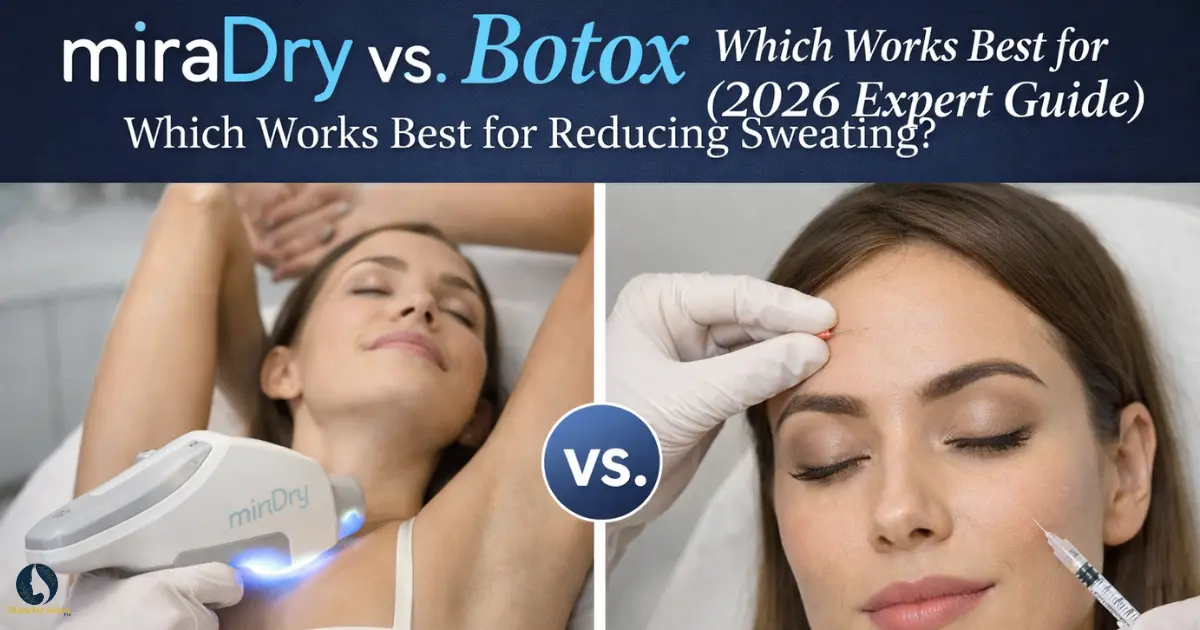
Excessive sweating, medically known as hyperhidrosis, affects daily comfort, confidence, and social interactions. Modern cosmetic dermatology now offers advanced non-surgical treatments that effectively control sweat production without surgery or long recovery periods. Two of the most trusted options are miraDry and Botox injections, both widely used in medical aesthetic clinics.
Although both treatments reduce sweating, they work differently. miraDry permanently reduces underarm sweat glands using energy technology, while Botox temporarily blocks nerve signals that activate sweating. Understanding their differences helps patients choose the safest and most effective treatment based on lifestyle, treatment goals, and long-term expectations.
Quick Comparison Overview
| Feature | miraDry | Botox for Sweating |
| Treatment Type | Energy-based device | Injectable treatment |
| Permanence | Long-lasting reduction | Temporary |
| Treatment Areas | Underarms only | Multiple body areas |
| Sessions Needed | 1–2 sessions | Every 4–6 months |
| Downtime | Mild swelling | Minimal |
| Maintenance | Usually none | Required |
How miraDry and Botox Work Differently
miraDry uses controlled microwave energy to target sweat glands beneath the skin. The heat safely destroys sweat and odor glands in the underarm area. Because sweat glands do not regenerate, results are long-term. The body naturally compensates by sweating elsewhere without affecting temperature regulation.
Botox works by blocking chemical signals between nerves and sweat glands. When injected into targeted areas, the glands temporarily stop producing sweat. The treatment does not remove glands but pauses their activity. Over time, nerve signaling returns, which is why maintenance treatments are required to maintain dryness.
Which Treatment Is More Effective for Hyperhidrosis
Effectiveness depends on treatment goals and sweating severity. Patients seeking permanent reduction often prefer miraDry, while those needing flexibility or treatment in multiple areas benefit more from Botox injections.
For example, a professional experiencing severe underarm sweating daily may achieve long-term relief from miraDry. Meanwhile, someone with sweaty palms affecting work performance may choose Botox since miraDry cannot treat hands or feet. Both treatments demonstrate high satisfaction rates when properly selected for the patient’s needs.
Safety and Medical Reliability in 2026
Both treatments are considered medically safe when performed by qualified professionals using approved protocols. miraDry involves localized energy delivery and does not circulate medication through the body, making systemic side effects extremely rare.
Botox has decades of medical use across cosmetic and therapeutic treatments. Side effects are generally mild and temporary, such as slight redness or minor swelling at injection sites. Proper technique and dosage planning significantly reduce risks and ensure natural, predictable outcomes for patients.
Who Should Consider miraDry or Botox
Patients struggling with persistent underarm sweating that stains clothing or causes odor concerns often benefit most from miraDry. Individuals wanting a one-time investment rather than repeated treatments frequently prefer this option.
Botox is ideal for patients seeking adjustable treatment or those experiencing sweating in areas like palms, feet, or the scalp. It is also commonly chosen by first-time patients who want to test treatment results before committing to a long-term solution.
Key Benefits of miraDry
- Permanent sweat reduction
- Odor gland removal
- Hair growth reduction
- Minimal maintenance
- Long-term solution
Advantages of Botox for Sweating
- Quick procedure time
- Minimal downtime
- Multiple treatment areas
- Adjustable results
- Proven medical history
Ideal Candidates for Each Treatment
- Severe underarm sweating
- Event-based sweat control
- Palms and feet sweating
- Long-term solution seekers
- Non-surgical preference
Comfort and Recovery Highlights
- Local numbing used
- Short treatment sessions
- Mild temporary swelling
- Fast return to work
- Minimal activity restriction
Treatment Area Comparison Table
| Body Area | miraDry | Botox |
| Underarms | Yes | Yes |
| Hands | No | Yes |
| Feet | No | Yes |
| Face/Scalp | No | Yes |
| Back/Chest | No | Possible |
Cost and Long-Term Value Comparison
| Cost Factor | miraDry | Botox |
| Initial Cost | Higher | Lower |
| Maintenance | None usually | Ongoing |
| Long-Term Expense | Lower overall | Higher over time |
| Treatment Frequency | 1–2 sessions | 2–3 yearly |
Results Timeline and Longevity
| Treatment | Results Start | Full Results Visible | How Long Results Last |
| miraDry | Immediate reduction or within a few days | Gradual improvement over several weeks | Permanent sweat reduction |
| Botox (for Sweating) | 3–7 days after treatment | Around 2 weeks | Approximately 4–6 months |
Side Effects Comparison
| Side Effect | miraDry | Botox |
| Swelling | Common short-term | Rare |
| Bruising | Rare | Possible |
| Tenderness | Mild | Minimal |
| Temporary numbness | Possible | Very rare |
| Muscle weakness | No | Rare cases |
Pros of miraDry
- Long-lasting results
- No repeat sessions
- Treats odor glands
- Confidence improvement
- Clothing protection
Underarm Botox Pros and Cons
- Fast visible results
- Non-surgical treatment
- Repeat maintenance needed
- Temporary effectiveness
- Flexible treatment plan
Final Thoughts: Choosing the Right Treatment
Both miraDry and Botox represent highly effective solutions for managing excessive sweating in 2026. Patients prioritizing permanent underarm dryness often find miraDry the better long-term investment. Those needing versatile treatment across multiple areas or preferring reversible outcomes may benefit more from Botox.
A professional consultation remains the most important step in determining the ideal approach. Proper evaluation ensures treatment selection aligns with anatomy, lifestyle, and expectations, resulting in safe and natural outcomes.
Frequently Asked Questions (FAQs)
What is the main difference between miraDry and Botox for sweating?
miraDry permanently reduces underarm sweat glands using microwave energy, while Botox temporarily blocks nerve signals that trigger sweating. The choice depends on whether you want long-term reduction or flexible, repeat treatments.
Which treatment works faster for excessive sweating?
Botox typically works faster because results begin within a few days. miraDry may show immediate reduction, but full improvement develops gradually as treated sweat glands permanently stop functioning over several weeks.
How long do miraDry and Botox results last?
miraDry provides permanent sweat reduction after one or two sessions. Botox results usually last four to six months, requiring maintenance treatments to maintain dryness and consistent symptom control.
Is miraDry or Botox more comfortable during treatment?
Both treatments use numbing techniques to improve comfort:
- Local anesthesia used
- Mild pressure sensations
- Short treatment time
- Minimal recovery discomfort
Can Botox treat sweating in areas other than underarms?
Yes, Botox is versatile and can treat multiple sweating areas, including:
- Palms
- Feet
- Forehead
- Scalp
Are the results from miraDry really permanent?
Yes. miraDry destroys sweat glands using controlled energy, and these glands do not regenerate. The body naturally regulates temperature through remaining glands, making the treatment safe and long-lasting.
What side effects should patients expect after treatment?
Common side effects are mild and temporary. Patients may notice swelling, redness, tenderness, or minor bruising. These symptoms typically resolve within days and rarely interfere with daily activities.
Who is a good candidate for miraDry or Botox treatments?
Ideal candidates include individuals experiencing excessive sweating affecting confidence, work, or daily comfort. Treatment choice depends on sweating location, lifestyle preferences, and whether permanent or temporary results are desired.
Can miraDry and Botox be combined for better results?
Yes, some patients combine treatments strategically:
- miraDry for underarms
- Botox for hands or events
- Enhanced sweat control
- Personalized treatment planning
Which treatment is more cost-effective long term?
miraDry often becomes more cost-effective because it usually requires one or two sessions. Botox has a lower upfront cost but ongoing maintenance treatments can increase total expenses over several years.