Masseter Botox is often promoted as a jaw slimming treatment, but it is also widely used for medical conditions such as TMJ disorders, jaw pain, and teeth grinding. Although both treatments involve injecting Botox into the same jaw muscle, the purpose, technique, dosage, and expected outcomes are very different. Many patients choose the wrong approach because they are not aware of these differences. This detailed guide explains Masseter Botox for TMJ versus cosmetic jaw slimming in a clear and practical way so you can choose the treatment that truly fits your needs.
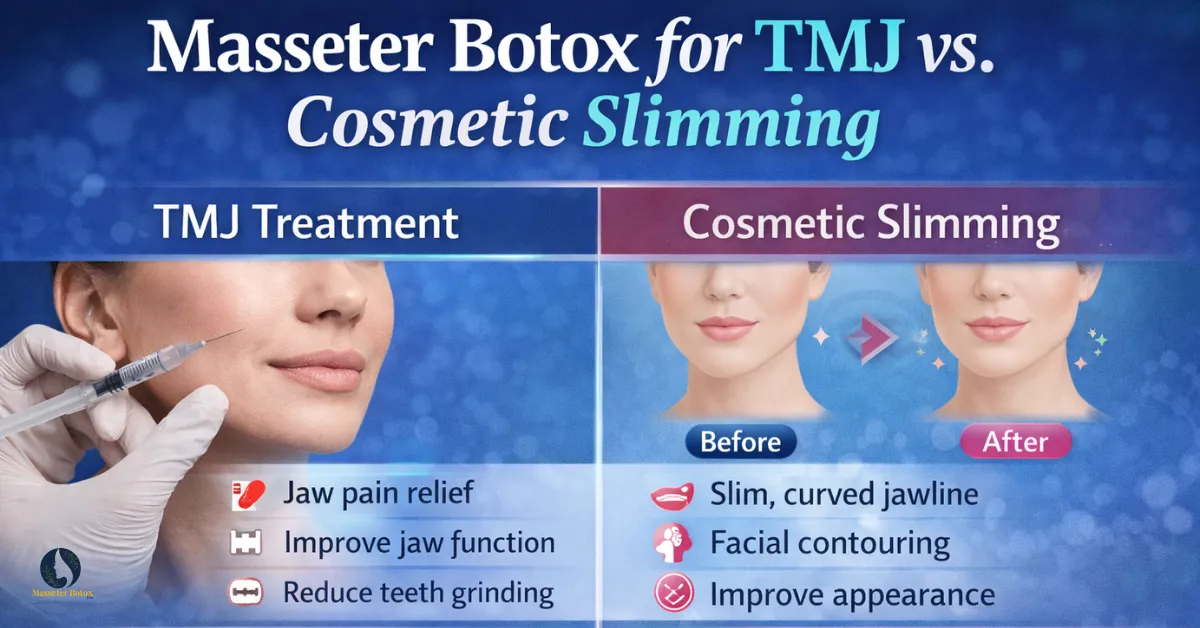
Masseter Botox for TMJ focuses on relieving jaw pain, muscle tension, and teeth grinding, while cosmetic Masseter Botox is used to slim a wide or bulky jawline. The difference lies in treatment goals, dosage, injection depth, and expected results.
Understanding the Masseter Muscle
The masseter muscle is one of the strongest muscles in the human body. It controls chewing, clenching, and biting, and it also plays a major role in determining the width and shape of the lower face. When the masseter muscle becomes overactive, it can lead to:
- Chronic jaw pain
- Teeth grinding or clenching
- Tension headaches
- Facial soreness
- A wide or square jawline
Botox works by relaxing this muscle and reducing excessive activity.
What Is TMJ and Why Botox Is Used
TMJ refers to disorders of the temporomandibular joint, which connects the jaw to the skull. TMJ problems are commonly linked to chronic muscle overuse, especially in people who clench or grind their teeth.
Common TMJ Symptoms
- Jaw pain or stiffness
- Clicking or popping sounds
- Difficulty opening the mouth
- Headaches or ear discomfort
- Neck and facial tension
Masseter Botox helps by reducing the pressure placed on the jaw joint and surrounding muscles.
Masseter Botox for TMJ (Medical Treatment)
Primary Purpose
- Reduce jaw pain and stiffness
- Control teeth grinding and clenching
- Improve jaw movement
- Reduce tension headaches
How It Works
Botox relaxes the masseter muscle, which lowers the force applied to the jaw joint. This helps reduce inflammation, muscle fatigue, and stress on the TMJ.
Typical Units for TMJ Treatment
| Severity | Units Per Side |
| Mild TMJ | 20–25 units |
| Moderate TMJ | 25–35 units |
| Severe TMJ or bruxism | 35–50 units |
TMJ treatment usually requires higher doses compared to cosmetic jaw slimming.
Masseter Botox for Cosmetic Jaw Slimming
Primary Purpose
- Slim a wide or bulky jaw
- Soften facial angles
- Improve lower face balance
- Create a more refined jawline
How It Works
Botox reduces muscle bulk over time. As the masseter muscle becomes smaller, the jawline appears narrower and less square.
Typical Units for Cosmetic Slimming
| Jaw Size | Units Per Side |
| Mild bulk | 15–20 units |
| Moderate bulk | 20–30 units |
| Strong masseter muscles | 30–35 units |
Cosmetic treatments focus on appearance rather than pain relief.
Key Differences Between TMJ and Cosmetic Masseter Botox
- TMJ treatment focuses on pain relief and jaw function
- Cosmetic treatment focuses on facial slimming and aesthetics
- TMJ Botox usually requires higher units
- Cosmetic Botox uses moderate dosing
- TMJ treatment may be partially covered by insurance
- Cosmetic treatment is not covered by insurance
- Jaw slimming is a secondary effect in TMJ treatment
- Jaw slimming is the primary goal in cosmetic treatment
Cost Comparison in the United States
| Treatment Type | Average Cost |
| Cosmetic Masseter Botox | $600–$1,000 |
| TMJ Masseter Botox | $800–$1,500 |
| Severe TMJ cases | $1,200–$1,800 |
Medical Masseter Botox may be partially covered by insurance if there is a confirmed TMJ diagnosis.
Which One Do You Need?
TMJ Masseter Botox May Be Right for You If
- You experience jaw pain or stiffness
- You grind or clench your teeth
- You have headaches related to jaw tension
- You struggle with jaw movement
Cosmetic Masseter Botox May Be Right for You If
- Your jaw appears wide or bulky
- You want facial slimming without surgery
- You have no jaw pain
- Your goal is purely aesthetic
Some Patients Benefit From Both
Many patients receive a combined approach to treat pain while also improving facial appearance.
Can One Treatment Achieve Both Goals?
Yes, but only when planned correctly. TMJ Masseter Botox can lead to some jaw slimming as a secondary effect. Cosmetic Masseter Botox may reduce mild tension, but it is not designed to treat TMJ disorders. An experienced provider adjusts dosage and placement carefully to avoid chewing weakness or facial imbalance.
How Long Do Results Last
| Purpose | Duration |
| TMJ relief | 3–6 months |
| Cosmetic slimming | 4–6 months |
| Long-term muscle reduction | With repeated sessions |
With consistent treatments, the masseter muscle may gradually reduce in size, allowing results to last longer.
Possible Side Effects
Common Temporary Effects
- Mild soreness
- Jaw fatigue
- Temporary chewing weakness
Rare Side Effects
- Facial asymmetry
- Difficulty chewing hard foods
These risks are reduced when treatment is performed by an experienced injector.
Why Choosing the Right Provider Matters
Masseter Botox is an advanced procedure that requires strong knowledge of facial anatomy and jaw function. Poor technique can cause functional problems or unnatural facial changes. Always choose a provider experienced in both TMJ management and cosmetic facial treatments.
Medical Reference
- American Academy of Dermatology
- National Institute of Dental and Craniofacial Research
Conclusion
Masseter Botox for TMJ and cosmetic jaw slimming are not the same treatment, even though they target the same muscle. TMJ treatment focuses on pain relief and restoring jaw function, while cosmetic Masseter Botox focuses on reshaping the jawline. Understanding this difference helps ensure you receive the right treatment. Some patients need only one approach, while others benefit from a combined plan. With proper assessment and an experienced provider, Masseter Botox can significantly improve comfort, appearance, and quality of life.