Botox remains one of the most trusted non-surgical treatments for wrinkles, muscle tension, migraines, TMJ disorders, and facial contouring. Yet despite its popularity, many patients experience shorter-than-expected results, sometimes lasting only a few months.
This has led to growing interest in nutritional and biochemical factors that influence Botox performance. Among these, zinc has emerged as one of the most researched and clinically discussed elements.
This guide explores how zinc interacts with botulinum toxin, why zinc deficiency may reduce Botox effectiveness, and how correct supplementation may help results last longer all explained in a science-backed, patient-friendly way.
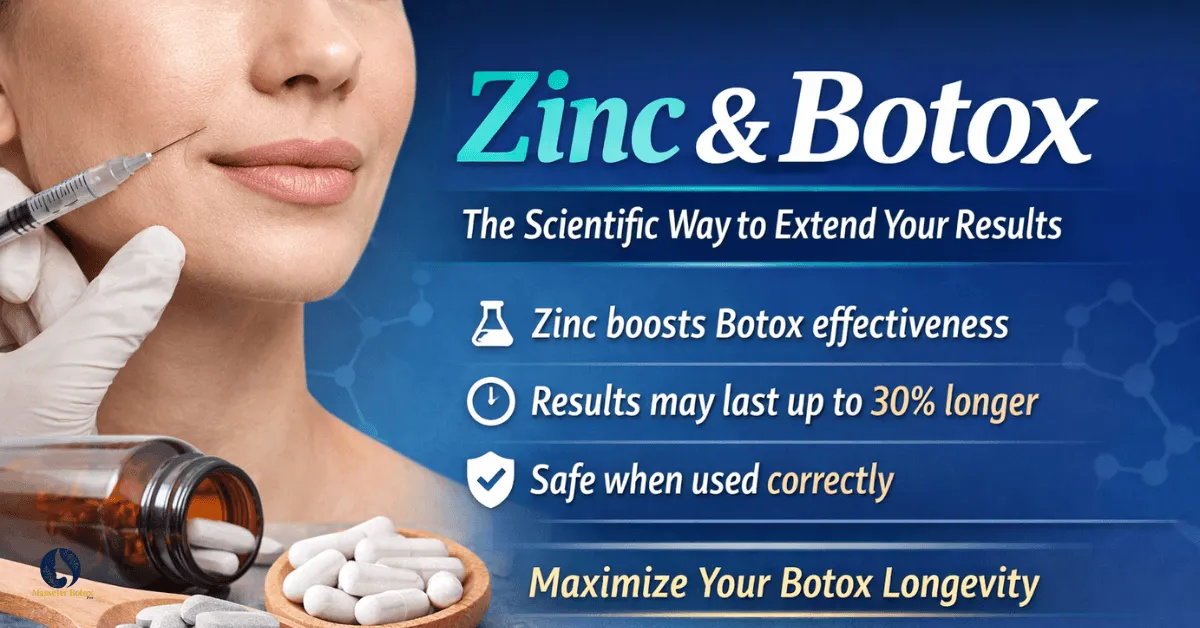
Zinc is required for the enzymatic activity of botulinum toxin. Research suggests that correcting zinc deficiency before Botox treatment may improve effectiveness and help results last up to 30% longer in some patients. Benefits depend on individual zinc levels and should be medically guided.
Understanding Botox at the Molecular Level
Botox (botulinum toxin type A) works by interrupting communication between nerves and muscles.
Key Biological Steps
- Botox enters the nerve terminal
- It blocks the release of acetylcholine
- Muscle contraction is temporarily reduced
- Wrinkles soften or muscle overactivity decreases
Critical detail:
Botulinum toxin relies on zinc-dependent metalloproteinase activity to cleave nerve proteins. Without sufficient zinc, this step may occur less efficiently.
Why Zinc Is Biochemically Essential for Botox
Zinc is not just a supplement — it is a cofactor, meaning it enables enzymes to function properly.
Zinc’s Role in Botox Function
- Activates the enzymatic structure of botulinum toxin
- Supports protein cleavage inside nerve cells
- Enhances neuromuscular blockade efficiency
- Maintains consistent toxin performance
When zinc levels are low, Botox may still work, but not at its full potential.
Zinc Deficiency: A Hidden Factor in Botox Longevity
Zinc deficiency is more common than many patients realize.
Common Causes
- Poor dietary intake
- High stress levels
- Aging-related absorption decline
- Digestive disorders
- Vegetarian or vegan diets
- Chronic inflammation
Even mild deficiency can impact enzyme-driven treatments like Botox.
Clinical Evidence Linking Zinc and Botox
While zinc does not “boost” Botox beyond its limits, studies and clinical observations show:
- Patients with zinc deficiency respond less strongly to Botox
- Zinc supplementation improves neuromuscular response
- Botox effects may last longer when zinc levels are adequate
A controlled study demonstrated measurable improvement in Botox duration among patients who corrected zinc deficiency before treatment.
How Much Longer Can Botox Last with Zinc? (Realistic Expectations)
| Aspect | Typical Botox | Botox with Adequate Zinc |
| Duration | 3–4 months | 4–6 months |
| Muscle relaxation | Moderate | More consistent |
| Wear-off speed | Faster | Slower |
| Need for touch-ups | Higher | Often reduced |
Zinc does not make Botox permanent. It improves efficiency, not permanence.
Who Is Most Likely to Benefit from Zinc + Botox?
Zinc supplementation is most helpful for patients who:
- Experience rapid Botox wear-off
- Have required increasing doses over time
- Receive Botox for TMJ or bruxism
- Have digestive or absorption issues
- Are over age 40
- Have a history of micronutrient deficiencies
Patients already seeing long-lasting results may notice little difference.
Zinc Supplementation Timing and Strategy
Best Timing Approach
- Start zinc 3–5 days before Botox
- Continue zinc 3–5 days after treatment
- Avoid long-term high-dose use unless supervised
Why Timing Matters
Botox activation occurs inside nerve cells shortly after injection, making zinc availability during this window especially important.
Choosing the Right Zinc Form
| Zinc Type | Absorption | Notes |
| Zinc gluconate | Good | Common and well tolerated |
| Zinc acetate | Very good | Often used in clinical studies |
| Zinc sulfate | Moderate | May cause stomach upset |
| Zinc + phytase | Excellent | Improves absorption from food |
💡 Avoid megadoses — more zinc does not mean better results.
Can Zinc Improve Botox for Medical Conditions?
Zinc may support Botox used for:
- TMJ disorders
- Bruxism (teeth grinding)
- Chronic migraines
- Muscle spasticity
- Cervical dystonia
Medical Botox patients should always consult their physician before supplementing.
Safety Considerations: What You Must Know
Short-term zinc supplementation is generally safe, but misuse can cause problems.
Short-Term Side Effects
- Mild nausea
- Metallic taste
- Stomach discomfort
Long-Term Excess Risks
- Copper deficiency
- Immune system imbalance
- Gastrointestinal irritation
This is why zinc should be used strategically, not continuously.
Zinc and Botox: What It Will NOT Do
Zinc will not:
- Make Botox permanent
- Replace proper injection technique
- Eliminate the need for repeat treatments
- Fix poor injector placement
Zinc is supportive, not corrective.
Expert Insight: Why Some Providers Recommend Zinc
Experienced injectors understand that:
- Botox effectiveness varies between patients
- Nutritional status influences neuromuscular response
- Zinc deficiency explains some cases of Botox resistance
This is why zinc is increasingly discussed in advanced aesthetic and medical practices.
Conclusion
Zinc does not change what Botox is but it can influence how efficiently Botox works. Because botulinum toxin depends on zinc-based enzymes, inadequate zinc levels may reduce its effectiveness and shorten its duration.
For patients who experience quick wear-off or inconsistent results, short-term zinc supplementation before and after Botox may help extend results by up to 30%, particularly when zinc deficiency is present.
Zinc should never be used blindly or excessively. When used correctly and under medical guidance, it represents a simple, science-backed way to support optimal Botox outcomes.