If you’ve been scrolling through TikTok or Instagram lately, you’ve probably come across the phrase “masseter Botox” more than a few times. From celebrities to everyday Americans, this subtle yet transformative treatment is quietly becoming one of the most requested cosmetic procedures in the country. But what exactly is masseter Botox, why are so many people getting it — and more importantly, why might you need it?
Let’s break it all down.
What Is the Masseter Muscle, Anyway?
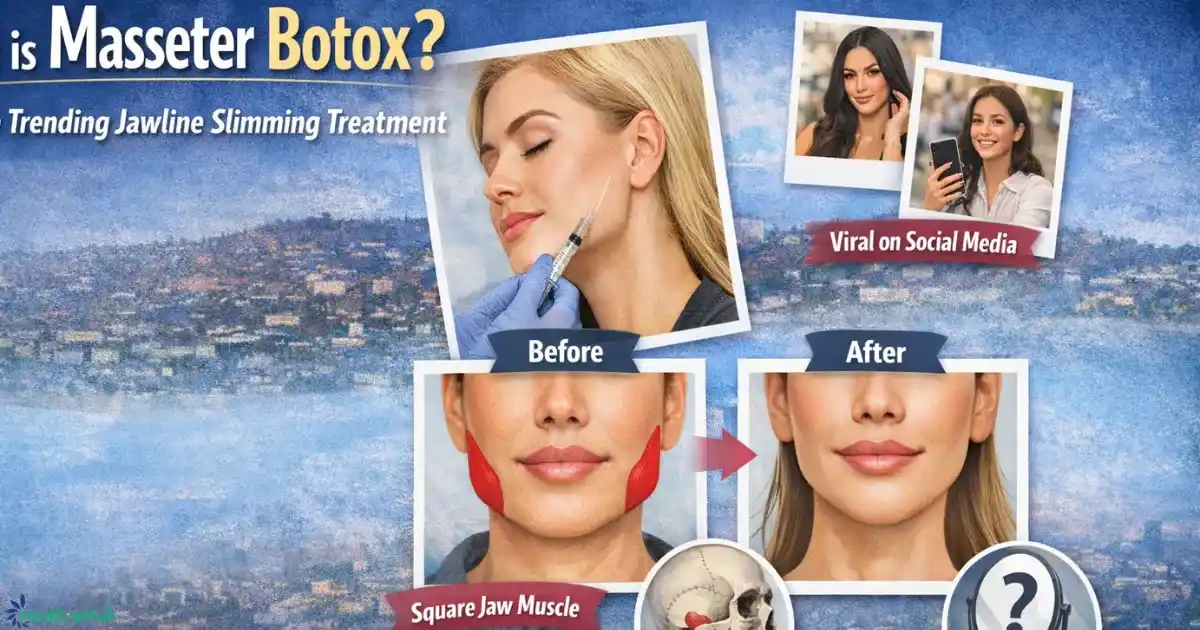
Before we talk about the treatment, let’s talk anatomy. The masseter is one of the most powerful muscles in your entire body. Located on both sides of your jaw, it’s the primary muscle responsible for chewing, clenching, and grinding your teeth. You can feel it yourself — place your fingertips on your jawline and clench your teeth. That bulge you feel? That’s your masseter.
For most people, this muscle works just fine and goes completely unnoticed. But for millions of Americans, the masseter muscle is overworked, oversized, or both — causing a cascade of physical and aesthetic problems that they didn’t even know were connected.
What Is Masseter Botox?
Masseter Botox (also called “jaw Botox” or “masseter reduction”) is a non-surgical cosmetic treatment where small doses of botulinum toxin (Botox) are injected directly into the masseter muscle on each side of the face. The Botox works by temporarily relaxing the muscle, which causes it to gradually shrink in size over several weeks.
The result? A slimmer, more defined jawline, reduced facial tension, and relief from pain — all without surgery, without downtime, and without a scalpel in sight.
The procedure takes less than 15 minutes and most patients describe the discomfort as minimal — comparable to a small pinch. Results typically last 4 to 6 months, and with regular treatments, the muscle can stay reduced long-term.
The Top Reasons Americans Are Getting Masseter Botox
1. Bruxism: The Silent Epidemic Nobody Talks About
Here’s a jaw-dropping statistic (pun intended): approximately 10% of Americans suffer from bruxism — the chronic habit of grinding or clenching their teeth, usually during sleep. Many people don’t even realize they’re doing it until their dentist notices the wear on their enamel or they wake up with persistent jaw pain and headaches.
Bruxism is often triggered by stress and anxiety, and in a culture where stress levels are higher than ever, it’s no surprise this condition is so widespread. Left untreated, bruxism can lead to:
- Cracked or worn-down teeth
- TMJ (temporomandibular joint) disorder
- Chronic headaches and migraines
- Neck and shoulder tension
- Disrupted sleep
Masseter Botox is one of the most effective non-dental treatments for bruxism. By relaxing the masseter, the muscle simply can’t clench as forcefully during sleep. Patients frequently report waking up without jaw pain for the first time in years. It doesn’t cure the root cause of stress, but it gives the jaw a much-needed break and protects teeth in the process.
2. TMJ Disorder and Chronic Jaw Pain
TMJ disorder affects an estimated 35 million Americans, and women are diagnosed at a disproportionately higher rate than men. The temporomandibular joint is the hinge that connects your jaw to your skull, and when the masseter muscle is overworked or hypertrophied (enlarged), it puts constant pressure on this joint.
The symptoms of TMJ are relentless: jaw pain, clicking or popping sounds when you open your mouth, difficulty chewing, earaches, facial tenderness, and lockjaw in severe cases. For many sufferers, TMJ becomes a chronic condition that’s frustrating to treat with conventional methods.
Masseter Botox has emerged as a game-changing option for TMJ relief. By reducing the tension and force generated by the masseter, it takes pressure off the joint and surrounding structures. Many patients describe it as one of the few treatments that actually delivered real, lasting relief rather than just masking symptoms.
3. Tension Headaches That Never Seem to Go Away
Do you frequently wake up with a dull headache, or get headaches that seem to originate from your temples or the sides of your face? If so, your jaw may be the culprit — and your masseter muscle is almost certainly involved.
When the masseter is chronically tight from clenching, it generates tension that radiates upward through the temples and across the forehead. This is a frequently overlooked trigger for tension-type headaches and even migraines.
Neurologists and aesthetic providers alike have noted that masseter Botox significantly reduces headache frequency in patients who clench or grind. Think of it this way: if the source of the tension is the muscle itself, relaxing that muscle removes the source. It’s not just a cosmetic fix — it’s a functional one.
4. The Desire for a Slimmer, More Sculpted Jawline
Let’s be real — aesthetics matter, and there’s absolutely nothing wrong with wanting to look and feel your best. In the United States, the demand for facial slimming procedures has grown dramatically over the past five years, and masseter Botox is leading the charge.
A hypertrophied masseter makes the lower face appear wider and more square-shaped. While this look is celebrated in some cultures, many American patients — particularly women — feel that a prominent jawline makes their face look heavier or more masculine than they’d like. Even men who don’t necessarily want a slimmer jaw often seek out the treatment for facial balancing purposes.
Masseter Botox can:
- Create a more oval or heart-shaped face by reducing lower facial width
- Define the natural jawline more clearly
- Create better facial proportion and symmetry
- Offer a subtle, natural-looking result that doesn’t scream “I had work done”
What makes this particularly appealing to the American aesthetic market is how understated the results are. Unlike surgical jaw reduction (which involves shaving down the bone and carries significant risks), masseter Botox produces a gradual, soft change that looks completely natural. People will notice you look refreshed, but they won’t be able to pinpoint exactly why.
5. It’s a Non-Surgical, Low-Commitment Procedure
Americans are increasingly drawn to the idea of cosmetic enhancement without going under the knife. The aesthetic industry has shifted dramatically toward minimally invasive procedures, and masseter Botox fits perfectly into this trend.
Consider what it offers:
- No anesthesia required — just a topical numbing cream if desired
- No downtime — you can return to work immediately
- No visible scars or incisions
- Reversible — if you don’t love the results, the effects wear off naturally
- Quick procedure — literally a lunch-break treatment
In a busy American lifestyle where time is precious and surgical risks feel daunting, a 15-minute appointment that delivers real, visible results is incredibly appealing. It’s also far more affordable than surgical alternatives, with the average treatment in the US ranging from $500 to $1,000 per session depending on the provider and location.
6. Addressing Facial Asymmetry
Not everyone’s face is perfectly symmetrical — in fact, most of us have some degree of asymmetry. But when one masseter is noticeably larger than the other, it can create a visible imbalance that many people find bothersome.
This asymmetry often develops because people tend to chew predominantly on one side, or because one side clenches more intensely during sleep. Over time, the dominant side’s masseter becomes hypertrophied, making the face look uneven.
A skilled injector can use strategic Botox dosing to balance the two sides, creating a more symmetrical and harmonious appearance. This is a highly customized procedure — your provider will assess both the size and shape of each masseter individually before determining the right approach for your face.
7. A Confidence Boost That Goes Beyond Skin Deep
There’s a psychological dimension to masseter Botox that doesn’t get talked about enough. Chronic jaw pain, grinding, and tension headaches don’t just hurt physically — they wear you down emotionally. Waking up in pain every morning, popping ibuprofen before noon, or constantly rubbing your jaw during the workday takes a real toll on your quality of life.
When patients get relief from these symptoms — sometimes for the first time in years — the confidence and energy boost is profound. Add the aesthetic improvements on top of that, and it’s easy to understand why so many people describe masseter Botox as genuinely life-changing, not just cosmetically pleasing.
Who Is a Good Candidate for Masseter Botox?
You might be a great candidate for masseter Botox if you:
- Grind or clench your teeth (especially at night)
- Wake up with jaw soreness, facial tension, or headaches
- Have been diagnosed with TMJ disorder
- Notice your jaw muscle bulging when you clench
- Want a slimmer or more oval-shaped lower face
- Have visible facial asymmetry related to jaw size
- Are looking for a non-surgical facial contouring option
Most healthy adults are good candidates. However, masseter Botox is not recommended during pregnancy or breastfeeding, for people with certain neuromuscular disorders, or for those taking specific medications. A consultation with a board-certified provider is the essential first step.
What to Expect: The Process from Start to Finish
Consultation: Your provider will assess your masseter size, jaw structure, and discuss your goals — whether they’re primarily functional (pain relief) or aesthetic (facial slimming), or both.
The Injection: Using a fine needle, Botox is injected at two to three points on each masseter. Most patients feel minimal discomfort. The whole thing takes about 10–15 minutes.
Initial Results: You’ll start noticing reduced tension and grinding within 2 to 4 weeks. The aesthetic slimming effect, which requires the muscle to physically reduce in size, typically becomes visible at 4 to 6 weeks and continues improving over the following months.
Maintenance: Results last approximately 4–6 months for first-time patients. With repeated treatments, many patients find the results last longer as the muscle gradually stays reduced. Some patients eventually extend their interval to once a year.
Choosing the Right Provider in the USA
This is critical. Masseter Botox is a medical procedure that requires anatomical knowledge and injection expertise. Always seek out a board-certified dermatologist, plastic surgeon, or licensed medical aesthetic provider with specific experience in facial Botox.
Red flags to avoid include unusually low prices (a sign of diluted product or undertrained injectors), providers who don’t conduct a proper consultation, or med spas without medical oversight.
The American Board of Dermatology and the American Society of Plastic Surgeons both have online provider-finder tools that can help you locate qualified professionals in your area.
The Bottom Line
Masseter Botox isn’t just a trend — it’s a medically sound, aesthetically effective, and life-improving treatment that’s gaining well-deserved popularity across the United States. Whether you’re grinding your teeth in your sleep, dealing with chronic jaw pain, battling stubborn tension headaches, or simply wanting a more sculpted facial profile, masseter Botox offers a compelling solution.
It sits at the rare intersection of medicine and aesthetics — fixing a real problem while simultaneously making you look and feel better. And in a country where stress is at an all-time high and minimally invasive procedures are revolutionizing cosmetic care, it’s no wonder this little injection is making such a big impact.
If you’ve been on the fence, consider this your sign to schedule that consultation. Your jaw has been working overtime long enough.
This article is for informational purposes only and does not constitute medical advice. Always consult with a qualified healthcare provider before pursuing any cosmetic or medical treatment.