At this time cosmetic and therapeutic treatments, few procedures offer the dual benefits of masseter Botox. You may have seen it trending on social media or heard friends rave about their newly sculpted jawline. But beyond the aesthetic appeal, this treatment is a game-changer for those suffering from chronic teeth grinding and jaw pain. This comprehensive guide answers the primary question, “what does masseter Botox do?” while exploring the costs, side effects, and expected results to help you decide if this non-surgical procedure is right for you.
What is Masseter Botox?
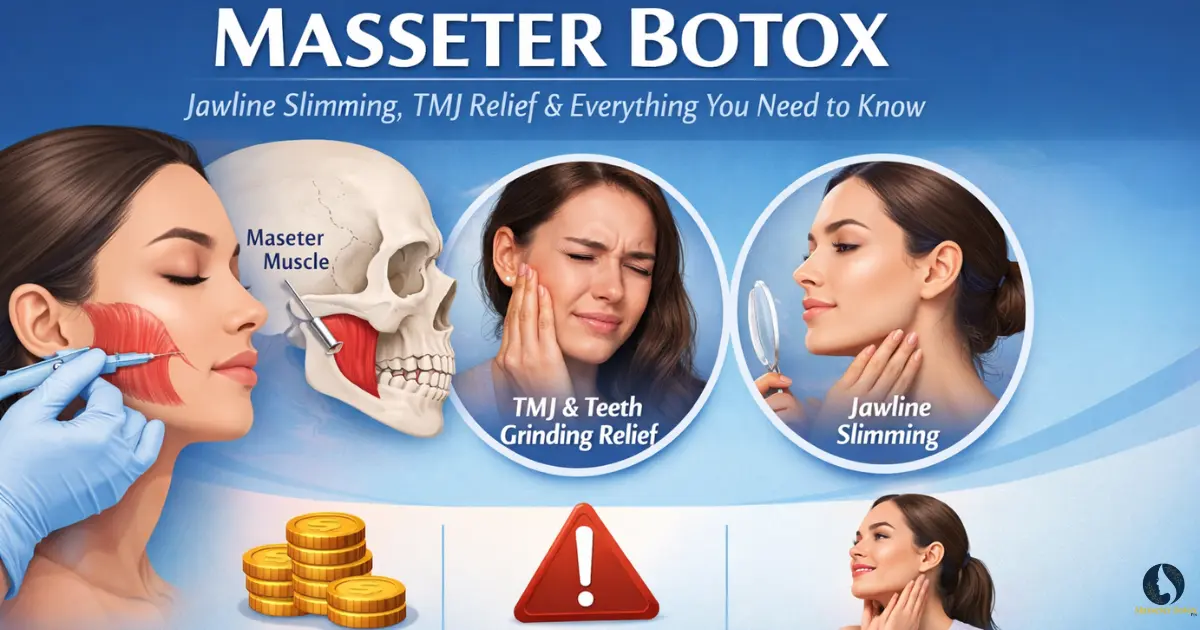
To understand the procedure, you first need to know the anatomy. The masseter muscle is one of the strongest muscles in your face, located at the angle of your jaw. It is primarily responsible for chewing and clenching.
Masseter Botox involves injecting botulinum toxin into this specific muscle. While Botox is famously used to smooth wrinkles, its application in the masseter serves two main purposes:
- Therapeutic: To relax overactive muscles causing pain and dental issues.
- Cosmetic: To slim the lower face by reducing the bulk of the muscle, creating a more contoured, V-shaped appearance.
Primary Functions of Masseter Botox
| Function Category | Specific Benefit | Description |
| Therapeutic | Bruxism Treatment | Reduces involuntary teeth grinding and clenching, protecting dental enamel. |
| Therapeutic | TMJ Relief | Alleviates pain and pressure in the temporomandibular joint. |
| Therapeutic | Headache Relief | Decreases tension headaches caused by tight jaw muscles radiating towards the temples. |
| Cosmetic | Jawline Slimming | Weakens the muscle so it shrinks over time, narrowing a square or bulky jawline. |
| Cosmetic | Facial Asymmetry Correction | Balances the face if one side of the jaw is larger due to unilateral clenching. |
The Therapeutic Benefits: More Than Just Cosmetic
While many seek out this treatment for beauty purposes, the medical benefits are often life-changing for patients.
Relief from Bruxism
Chronic teeth grinding can lead to worn-down teeth, cracked enamel, and tooth sensitivity. By injecting Botox into the masseter, the nerve signals that trigger involuntary muscle movement are blocked. This relaxes the jaw, stopping the grinding motion during sleep and giving the teeth and jaw joint a chance to heal.
Alleviating TMJ Disorders
Temporomandibular Joint Disorders can cause a cascade of issues, including jaw pain, clicking sounds, locking of the joint, and difficulty chewing. Because an overactive masseter muscle often contributes to TMJ stress, relaxing it with Botox can provide significant jaw pain relief and improve range of motion.
Reducing Tension Headaches and Migraines
Tension in the jaw does not stay isolated; it often radiates. Patients frequently report that masseter Botox alleviates tension headaches that originate in the jaw and spread to the temples, neck, and even shoulders.
The Cosmetic Transformation: Achieving a Slimmer Jawline
For those with a square or wide lower face due to masseter hypertrophy, this treatment offers a non-surgical alternative to jaw reduction surgery.
How It Slims the Face
When you repeatedly clench or chew gum, you are essentially working out your jaw muscles. Like biceps in the gym, the masseter gets bulkier. Jawline slimming occurs because Botox temporarily paralyzes the muscle, causing it to atrophy from disuse. Over a few weeks, the face takes on a softer, more tapered appearance.
Masseter Botox vs. Dermal Fillers
It is important to distinguish between these two injectables:
- Masseter Botox reduces volume by shrinking the muscle.
- Jawline filler adds volume to define the jawbone angle or correct asymmetry.
The Procedure: What to Expect
If you are considering this treatment, understanding the process can ease anxiety and help you prepare.
Before the Procedure
Your journey begins with a consultation. A qualified practitioner will assess your facial symmetry, palpate the masseter muscle, and ask you to clench to see its size and movement. This is the time to discuss your goals, whether they are pain relief, aesthetic contouring, or both.
During the Procedure
- Duration: The injection process itself is quick, usually lasting about 15 to 20 minutes.
- Technique: The provider may mark your skin and ask you to clench to locate the bulk of the muscle. Using a very fine needle, they administer the injections directly into the muscle belly. Typically, 3 to 4 injections are given per side.
- Dosage: The number of masseter Botox units required is higher than those for forehead wrinkles due to the muscle’s strength. You can expect between 20 to 30 units per side.
Aftercare and Recovery
There is no downtime, but to prevent the toxin from migrating, you must follow specific aftercare instructions:
- Do: Remain upright for 4 hours. Apply ice for swelling.
- Do Not: Rub or massage the area, lie down flat, exercise vigorously, or consume alcohol for 24 hours.
Results Timeline: Patience Pays Off
Unlike forehead Botox which shows immediate freezing of movement, masseter results are gradual because you are waiting for the muscle to shrink.
- Weeks 1 to 2: Initial effects of relaxation. You may notice less clenching power and reduced jaw soreness.
- Weeks 4 to 6: Peak visible results. The jawline appears noticeably slimmer and more contoured.
- Duration: Results typically last between 4 to 6 months. With repeated treatments over 12 to 18 months, the muscle can remain permanently reduced due to prolonged inactivity.
Potential Side Effects and Risks
While generally safe, masseter Botox is not without risks, especially if performed by an inexperienced injector. Understanding the potential side effects is crucial.
Common Side Effects
- Temporary soreness, swelling, or bruising at the injection site.
- Mild headaches immediately following treatment.
Rare but Serious Risks
- Crooked Smile: If the toxin spreads to muscles that control the mouth, it can cause an uneven smile or difficulty holding liquids in the mouth.
- Jowling: If the muscle is over-relaxed or the injection is too low, it can no longer support the skin above, leading to sagging or the appearance of jowls.
- Difficulty Chewing: Because the muscle is weakened, chewing tough or chewy foods may feel different or more tiring for a few weeks.
Cost Analysis
The cost of masseter Botox varies widely based on geography, provider expertise, and the number of units needed. Because this is a larger muscle, it requires more product than typical cosmetic areas.
| Expense Factor | Details |
| Price Per Unit | Typically ranges from $10 to $15 per unit. |
| Total Units | Average treatment uses 40 to 60 units total. |
| Total Cost Range | Sessions generally cost between $400 and $1,200. |
| Insurance | Usually considered cosmetic and not covered. However, if you have documented TMJ or chronic pain, some providers may help you seek partial reimbursement. |
Contraindications: Who Should Avoid It
You may not be a candidate for this treatment if you:
- Are pregnant or breastfeeding.
- Have a neuromuscular disorder.
- Are allergic to Botox or cow’s milk protein.
- Have an infection at the proposed injection site.
Conclusion
Masseter Botox is a remarkable example of a treatment that bridges the gap between medical necessity and cosmetic desire. Whether you are seeking TMJ relief from debilitating jaw pain or aiming for a sleek, V-shaped jawline for your profile pictures, the key to success lies in the hands of your provider.
Always choose a qualified medical professional who understands the complex anatomy of the lower face to ensure you achieve natural-looking, safe, and effective results.
Frequently Asked Questions About Masseter Botox
Does masseter Botox hurt?
Most patients find it less painful than forehead injections because the skin over the jaw is thicker. It is often described as a slight pinch.
Will I still be able to chew food?
Yes, you will still be able to eat. However, very tough or chewy foods might feel like a workout for the first few weeks as the muscle adjusts.
Can masseter Botox make my face look asymmetrical?
If performed by an unqualified injector, yes. However, an experienced professional uses precise dosing to balance the muscles, often correcting asymmetry rather than causing it.
How long does masseter Botox last?
The effects usually last between 3 to 6 months. Maintenance treatments are required to sustain the slimming effect.
Why does my jaw click?
Jaw clicking is a sign of TMJ disorder. By relaxing the masseter muscle, Botox can reduce the pressure on the joint, which may alleviate clicking sounds, though results vary.
At what age should I consider masseter Botox?
There is no specific age; suitability is based on anatomy and symptoms. Younger adults in their 20s often seek it for slimming, while older adults seek it for pain relief.
Can I get masseter Botox if I have a round face?
Yes, but you need a careful consultation. If the roundness is due to bone or fat, Botox may not provide the V-shape you desire. It is most effective for those with bulkiness caused by muscle.
What is the difference between Dysport and Botox for masseter?
Both are neuromodulators and work similarly. Dysport may diffuse slightly more, so an expert injector will adjust dosing accordingly. The choice often comes down to provider preference.
Can I combine masseter Botox with other treatments?
Absolutely. It is often combined with chin filler to enhance projection or with jawline filler to add definition to the angle, creating a comprehensive lower-face contouring effect.
Is there an alternative to Botox for slimming the jaw?
Non-Botox alternatives include reducing gum chewing, using a mouthguard to reduce clenching, and in extreme cases, surgical jaw reduction. However, these are either less effective or more invasive than Botox.