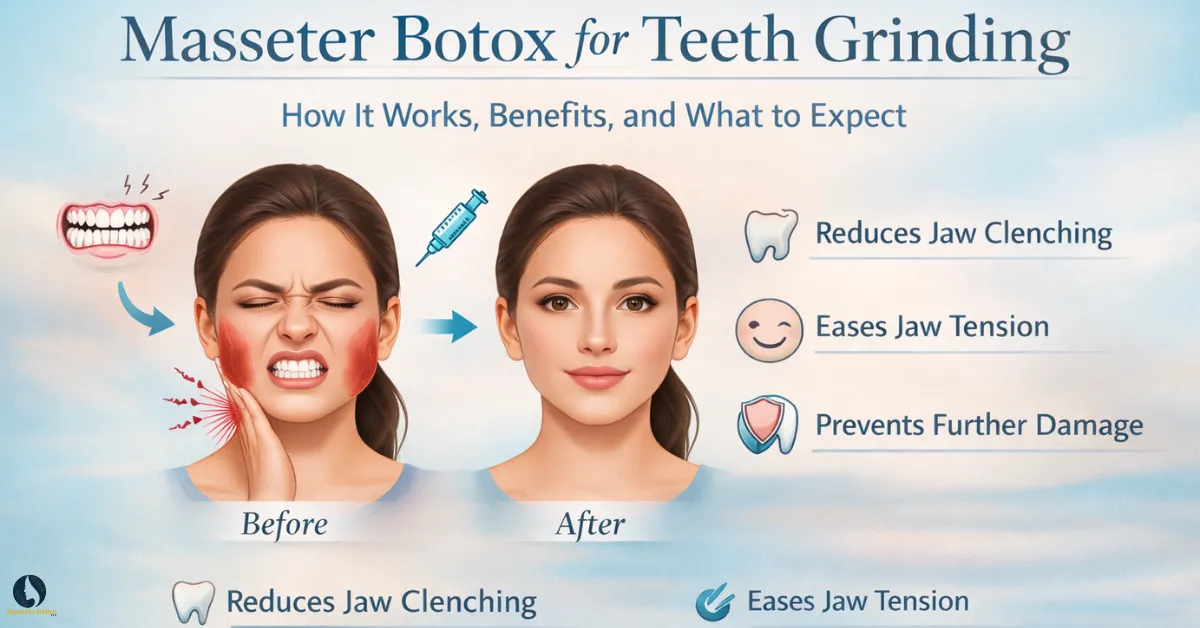
Teeth grinding, medically known as bruxism, is more than a harmless habit. Chronic jaw clenching and nighttime grinding can lead to jaw pain, headaches, dental wear, and long-term muscle damage. Masseter Botox for teeth grinding has emerged as an effective, non-surgical treatment that targets the root cause—overactive jaw muscles rather than just managing symptoms.
By relaxing the chewing muscles, Botox reduces pressure on the teeth, eases jaw tension, and helps prevent further damage, offering both functional relief and aesthetic improvement.
What Is Teeth Grinding and Jaw Clenching?
Teeth grinding, or bruxism, involves excessive clenching or grinding of the teeth, often occurring unconsciously during sleep. Many people are unaware they grind their teeth until symptoms appear or a dentist identifies signs of wear.
Common effects of bruxism include:
- Tight or sore jaw muscles
- Tooth enamel erosion and fractures
- Jaw pain and stiffness
- Tension headaches
- Neck and shoulder discomfort
Over time, constant muscle overuse can cause masseter muscle hypertrophy, making the jaw appear wider and more angular.
What Are the Causes of Teeth Grinding?
The causes of teeth grinding are often multifactorial and may differ from person to person. Understanding these causes helps determine whether masseter Botox for bruxism is an appropriate solution.
Common contributing factors include:
- Stress and anxiety leading to subconscious clenching
- Sleep disorders such as sleep apnea
- Misaligned teeth or bite issues
- Lifestyle factors including caffeine, alcohol, smoking, and certain medications
- Genetic predisposition to bruxism
When muscle overactivity is the primary driver, Botox offers targeted relief.
How Masseter Botox for Teeth Grinding Works
Botox for teeth grinding works by temporarily relaxing the overactive chewing muscles, primarily the masseter muscles and, in some cases, the temporalis muscles.
When Botox is injected:
- Nerve signals to the jaw muscles are reduced
- Muscle contraction strength decreases
- Pressure on the teeth is lowered
- Jaw tension and pain are relieved
This approach directly addresses the muscular cause of grinding rather than relying solely on protective devices like mouthguards.
What to Expect From Masseter Botox Treatment
Before Treatment
During consultation, the provider evaluates jaw muscle size, clenching patterns, and symptoms. A personalized plan is created, including dosage, injection sites, and expected outcomes. This step is essential for safe, balanced results.
During Treatment
The procedure typically takes 10–15 minutes. Using a very fine needle, Botox is injected into the masseter muscles on both sides of the jaw. Discomfort is minimal, and anesthesia is rarely required.
After Treatment
Within 1–2 weeks, jaw tension begins to ease. Teeth grinding intensity decreases, and jaw soreness gradually improves. Results usually last 3 to 6 months, after which treatment can be repeated if needed.
Consequences of Untreated Teeth Grinding
Ignoring chronic teeth grinding can lead to long-term complications that extend beyond dental health.
Potential consequences include:
- Severe tooth wear and fractures
- Chronic jaw pain and TMJ-related muscle pain
- Frequent headaches
- Facial muscle enlargement and jaw widening
- Changes in facial appearance due to muscle hypertrophy
Early intervention with jaw Botox for clenching can help prevent these outcomes.
Masseter Botox Before and After for Teeth Grinding
Masseter Botox for teeth grinding before and after results are both functional and visual. While the primary goal is pain relief and muscle relaxation, many patients also notice subtle jawline slimming.
Typical improvements include:
- Reduced jaw tension
- Less frequent or intense grinding
- Decreased headaches
- Softer jawline appearance over time
These changes develop gradually and appear natural.
Advantages and Disadvantages of Masseter Botox for Bruxism
Benefits
- Reduces jaw muscle tension and clenching
- Prevents tooth wear and muscle overload
- Quick, minimally invasive treatment
- No downtime or recovery period
- Effects last several months
- May improve jawline appearance
Limitations
- Temporary results requiring repeat treatments
- Mild side effects such as swelling or bruising
- Not suitable for everyone
- Does not address underlying stress or sleep disorders
Botox works best as part of a comprehensive approach to bruxism management.
Cost and Insurance Considerations
Masseter Botox for teeth grinding cost varies depending on:
- Number of units required
- Severity of muscle hypertrophy
- Clinic location
- Provider expertise
Because the masseter muscle is large, treatment often requires more units than cosmetic Botox. Coverage under insurance is inconsistent. In some cases, masseter Botox for teeth grinding insurance coverage may be possible when documented as a medical necessity, but many plans consider it elective.
Who Is a Good Candidate for Masseter Botox?
You may be a good candidate if you:
- Experience chronic teeth grinding or jaw clenching
- Have jaw pain, headaches, or muscle tightness
- Have not found relief with mouthguards alone
- Prefer a non-surgical treatment option
It may not be suitable for individuals with certain neurological conditions or during pregnancy.
Final Thoughts
Masseter Botox for teeth grinding offers a targeted, effective solution for reducing jaw tension, preventing dental damage, and improving quality of life. By addressing the muscular source of bruxism, it goes beyond symptom management and provides meaningful relief with minimal disruption.
For individuals struggling with persistent clenching or grinding, masseter Botox represents a scientifically supported, non-surgical option that can restore comfort, protect dental health, and support long-term jaw wellness.
Trusted Medical & Clinical References
- American Academy of Dermatology
https://www.aad.org
Authoritative guidance on botulinum toxin (Botox) uses, safety, and facial muscle treatments. - Mayo Clinic
https://www.mayoclinic.org
Trusted explanations of bruxism, jaw clenching, muscle pain, and botulinum toxin therapy. - National Institutes of Health
https://www.ncbi.nlm.nih.gov
Peer-reviewed studies on bruxism, masseter muscle hypertrophy, and botulinum toxin injections. - U.S. Food and Drug Administration
https://www.fda.gov
Official safety and regulatory information for botulinum toxin products.